

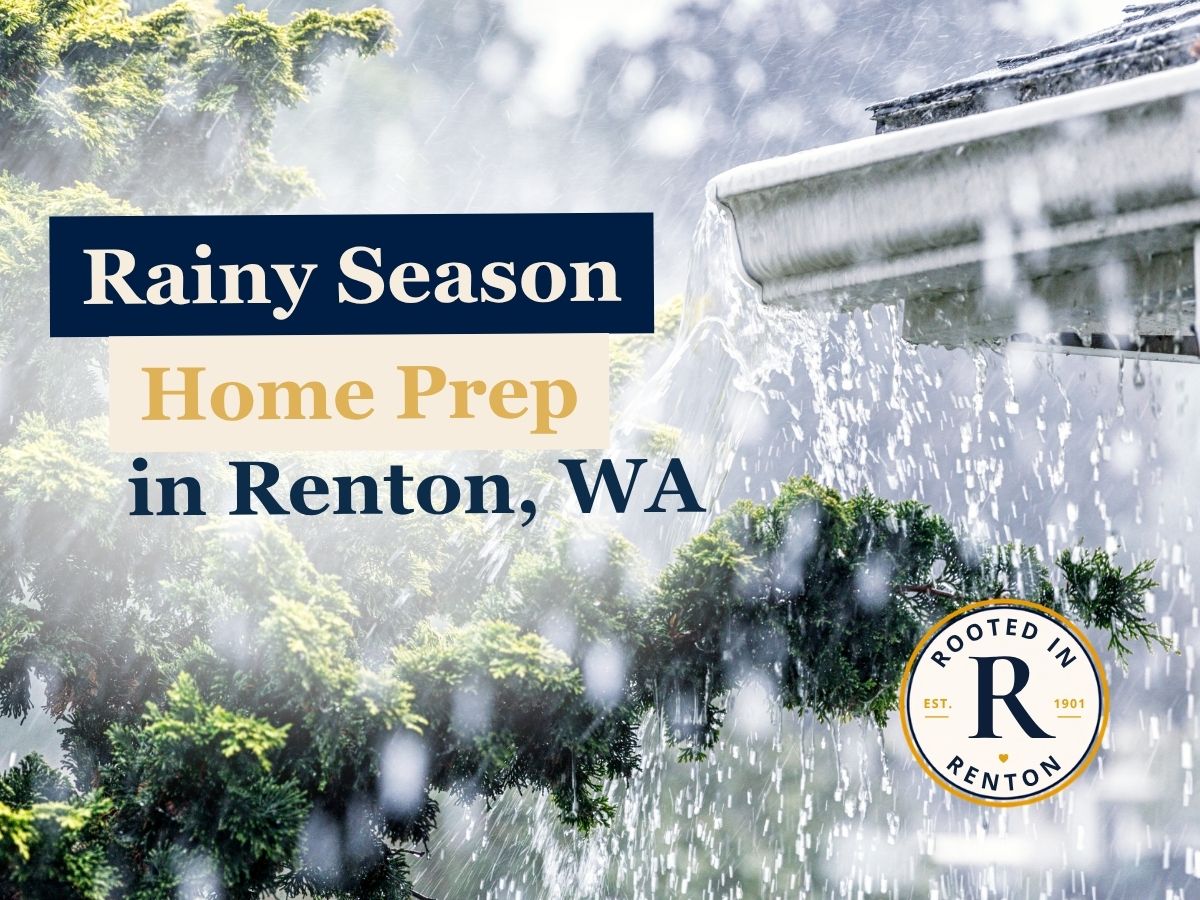
Rainy season in the Pacific Northwest gets a lot of attention for what happens above your head: roofs, moss, gutters, and leaks.
But there’s another question I think is even more useful:
Where does the water go?
A house doesn’t just need to keep water out. It needs to move water away from the places where it can cause problems.
When I’m walking a property, I’m looking at where water is collecting and where it’s going. Rain can actually be helpful when you’re looking at a house because you get to see how the property handles water in real time.
Here’s what I’d pay attention to around a Renton home when the rain starts.
Start at the Roof, But Don’t Stop There
The roof is the obvious place to begin, but it’s really the first step in the water’s path.
Look for obvious signs of trouble, including damaged areas, heavy debris, moss growth, or places where water may not be draining properly.
Then follow the water.
Rain runs from the roof into the gutters. From there, it needs to move through the downspouts and away from the house.
That’s where a small maintenance issue can become a bigger one.
Check the Gutters and Downspouts
Gutters and drainage are some of the most overlooked parts of home maintenance.
People tend to notice a leaking roof because the problem is obvious. A gutter full of leaves or a downspout sending water straight toward the house can be easier to ignore.
Take a look at your gutters during or after a good rain.
Are they overflowing?
Is water spilling over one particular section?
Are the downspouts actually carrying water away from the house?
And most importantly, where is that water ending up?
Keeping gutters and downspouts clear and making sure water is directed away from the foundation are simple maintenance steps that can help prevent moisture problems. The EPA also recommends paying attention to roof drainage and whether the ground around a building is allowing water to move away from the structure.
Look at the Ground Around the House
This is where following the water gets especially useful.
Walk around the exterior after a rainy day and look for places where water is collecting.
You might notice:
- Standing water near the foundation
- Soggy areas that stay wet
- Water pooling beneath a downspout
- Overflowing gutters
- Areas where the ground appears to be directing water toward the house
- Muddy or unusually damp areas
One puddle doesn’t automatically mean you have a major drainage problem. But repeated pooling in the same place is worth paying attention to.
Renton has an extensive stormwater system, and the city’s Surface Water Utility manages drainage infrastructure intended to reduce flooding and protect local waterways. Property owners still need to pay attention to how water moves on their own property.
If you notice a drainage issue that appears to involve the public stormwater system, Renton provides a way for residents to report storm drainage problems through Renton Responds.
Don’t Forget What’s Under the House
A home can look perfectly fine from the outside and still have a moisture issue underneath.
If your home has a crawlspace or basement, pay attention to signs such as:
- Musty smells
- Damp or wet areas
- Water staining
- Condensation
- Discolored or deteriorating materials
- Signs that moisture is getting in after rain
A musty smell doesn’t tell you exactly what’s causing the problem, but it shouldn’t be ignored. The EPA notes that musty odors can indicate mold growth and recommends investigating the source of moisture.
The same principle applies to staining around windows, walls, ceilings, or other areas of the home.
Don’t assume the visible mark is the whole problem.
A little moisture in a crawlspace or staining around a window doesn’t necessarily tell you where the water is coming from. The important thing is to identify the source.
Rain Can Actually Help You Inspect a Property
One of the things I like about looking at a property during rainy weather is that you get to see what the water is actually doing.
Instead of imagining where runoff might go, you can watch it.
Is water moving away from the house?
Is it collecting somewhere?
Are the gutters handling the rainfall?
Are downspouts sending water toward an area that stays wet?
Is there staining or moisture inside that corresponds with something you’re seeing outside?
You don’t need to diagnose every problem yourself. In fact, I wouldn’t recommend trying to.
Identify the sign. Then get the right professional involved to figure out the source.
That’s especially important with moisture problems because what looks small on the surface can sometimes be connected to a larger issue.
A Few Rainy-Season Checks Worth Keeping Up With
You don’t need to spend every rainy weekend inspecting your house from top to bottom.
But there are a few things worth staying on top of:
Keep gutters and downspouts clear.
Leaves and debris can interfere with drainage and cause water to overflow where you don’t want it.
Check where your downspouts discharge.
The goal is not simply to get water out of the gutter. You also want to pay attention to where that water goes next.
Watch drainage around the foundation.
Repeated standing water or soggy areas deserve a closer look.
Keep an eye on the roof.
Moss and accumulated debris can affect drainage and should be addressed as part of regular roof maintenance.
Check exterior seals and caulking.
Pay attention to areas around windows, doors, and other exterior openings where water could potentially get in.
Don’t ignore musty smells or moisture underneath the house.
Those are clues worth investigating rather than waiting for a more obvious problem.
The City of Renton also identifies gutters and downspouts as part of its weatherproofing repair assistance for eligible homeowners, which is a good reminder that these aren’t just cosmetic details. They’re part of how a home manages water.
Think About the Whole Water Path
The easiest way to remember all of this is to stop thinking about each maintenance item separately.
Think about the path.
Rain lands on the roof.
↓
It moves into the gutters.
↓
The downspouts carry it toward the ground.
↓
The ground and drainage system need to move it away from the house.
↓
The foundation, crawlspace, basement, and exterior walls need to stay protected from unwanted moisture.
At every step, ask the same question:
Where does the water go next?
That question can help you notice small maintenance issues before they turn into something more complicated.
Rainy-season home prep isn’t just about keeping water out.
It’s about making sure the water has somewhere to go.
And sometimes, the best time to figure that out is while it’s raining.
Leave a Reply