

Living in Ravensdale, Washington
Ravensdale isn’t a city, and hasn’t been one in a century, it’s an unincorporated community of about 555 neighbors, tucked into second-growth forest in southeast King County. No city hall, no stoplight, no downtown to speak of. Just acreage lots, quiet roads, ravens overhead, and one of the more remarkable coal-mining stories in Washington State history sitting quietly underfoot.
It starts in 1947, decades before I was born.
Picture Ravensdale then.
This was rural Washington. Logging and mining country. Long before Maple Valley became what it is today, before the shopping centers and subdivisions and all the conveniences we barely think twice about now.
And in this little corner of the Pacific Northwest, an Italian family was building a life.
The Collecchi family had already established roots in the area by the 1930s, and in 1947, Julie Collecchi was born in Ravensdale. She grew up with several siblings in a tiny 1922 house on SE 271st Street.
I can only imagine what life looked like inside that house then. A big Italian family somehow fitting into a very small home, in a rural community where the people next door weren’t just neighbors. They were part of your world.
And in Julie’s case, the boy next door would eventually become her husband.
Bob Benedetti’s family lived on the neighboring property. Julie and Bob grew up, fell in love and married in 1967. And then they did something that, looking back now, feels like the most Ravensdale thing imaginable:
They built their own home right between the two family homes.
They didn’t go searching for somewhere new to put down roots. They built right into the ones that were already there.
And they stayed.
Decades later, that’s where my Ravensdale story enters theirs.
I started dating their son John when I was around 18. A couple of years later, when I was about 20 or 21, Julie’s childhood home was sitting empty. The offer was basically this: if I wanted to remodel it, I could live there for a year rent-free.
And by “if I wanted to remodel it,” what that really meant was my stepdad and I were about to find out exactly what was hiding inside a house built in 1922.
Nothing was straight.
When we started taking the walls apart to level things out, we found old newspapers stuffed inside them as insulation. We added a bathroom. We redid the kitchen. We fixed what we could.
I never touched the basement. Some things in a nearly 80-year-old house are better left undiscovered. 😂
Then there was the tiny room I used as my closet. And when I say tiny, I mean tiny. I could barely fit my own stuff in there.
Then someone told me that had been Julie’s bedroom growing up.
Wait. Her bedroom?!
Here I was trying to figure out how one person was supposed to fit her clothes in there, while Julie had grown up in this little house with what I believe were five siblings.
At 20 or 21, I don’t think I had enough life behind me to understand how incredible all of this actually was. I was young. I was fixing up an old house. I was getting a year of free rent. It was an adventure.
Now I see something completely different.
I see Julie’s childhood home on one side. Bob’s family home on the other. And the home they built together sitting between them.
Three homes. Generations of one family story. All right there.
And for one little chapter of my own life, I got to live inside the house where that story began.
I think about those newspapers we found inside the walls. I think about Julie in that impossibly small bedroom. I think about how many people had eaten dinner in that kitchen before I ever remodeled it.
And maybe that’s part of why old homes have always meant something different to me. They’re not just square footage, bedrooms, bathrooms and resale value.
They’re layers.
Someone chose that land. Someone built those walls. Families grew up there. Kids fell in love with the kid next door. New homes were built. Generations stayed. And eventually some 20-year-old girl came along, tore into the walls and discovered newspapers from another lifetime hiding inside them.
For a year, I got to add my own little layer.
And all these years later, when I think about Ravensdale, that’s what I remember most:
Some people don’t just live somewhere. They become part of the place.
That’s what being Rooted means to me.
It wasn’t always Ravensdale.
The town began life as Leary, named for the Leary Coal Company, itself named for Seattle pioneer and businessman John Leary. Coal, not ravens, put this place on the map first.
The name that stuck came later, and it’s a good story: ravens used to gather along the Northern Pacific Railroad line that ran through town, feeding on grain spilled from passing boxcars. The birds became such a fixture that the town took their name, Ravensdale, and it’s carried it ever since, long after the trains and the mines that built it were gone.
Today the ravens are still around. So are the trees that grew back over the old mine workings.
Coal built this town, and shaped its whole history
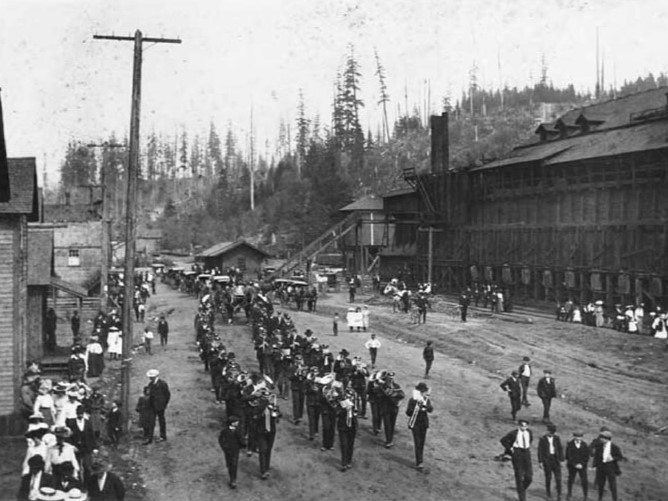
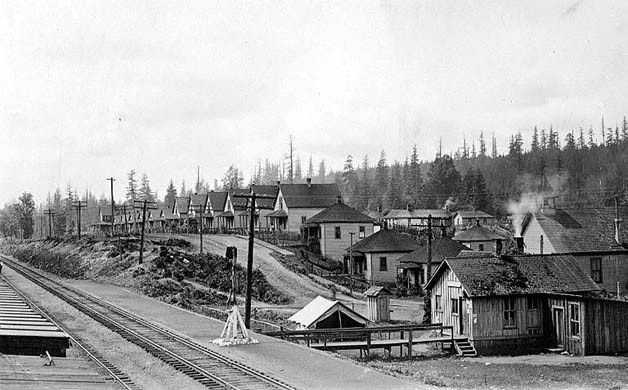
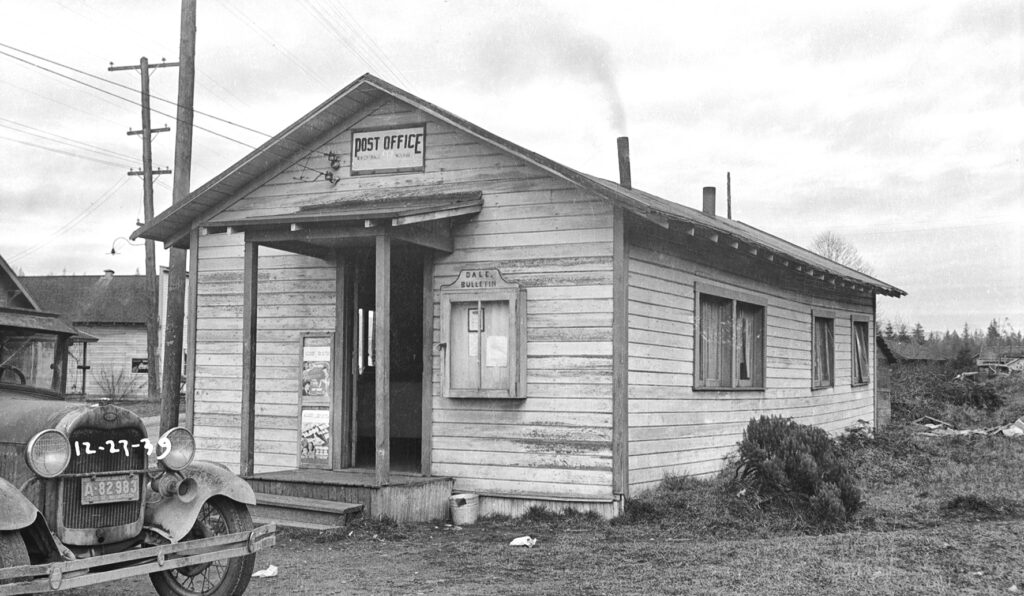
Ravensdale’s story runs deeper than most King County communities, literally. Underground coal mining defined the town for three-quarters of a century.
Underground coal mining begins at Ravensdale, operated by the Seattle and San Francisco Railway and Navigation Company. The settlement, still known as Leary, grows up around the mine.
The town has grown to roughly 1,000 residents, most of them mining families living and working around the coal operation.
Ravensdale is officially incorporated as a town.
A mine explosion kills 31 men, one of the worst mining disasters in Washington State history. It’s a somber chapter, and one the community has never forgotten; it led directly to the permanent closure of the Ravensdale mine. (Source: HistoryLink.org, linked below.)
With its founding industry gone, the town of Ravensdale is disincorporated. It has remained unincorporated ever since, governed as part of King County, not as its own city.
Smaller-scale coal mining continues in the area for decades, until the Palmer Coking Coal Company closes the Rogers No. 3 mine nearby, the last operating underground coal mine in the state of Washington.
What Ravensdale actually feels like now
A century on from the mines, Ravensdale is second-growth forest, big lots, and a handful of small lakes, the kind of place people move to for the quiet, not the commute.
Forest & acreage
Most Ravensdale homes sit on acre-plus lots under fir and cedar. This is horse-property, room-to-breathe country, not a subdivision grid, new construction here tends to mean a long driveway, not a cul-de-sac.
Small lakes, close by
Ravensdale Lake and Retreat Lake sit within the community, with Rock Creek running through it and King County-managed open spaces like Ravensdale Park and Henry’s Ridge Open Space nearby for hiking and trail riding.
Tahoma schools, no city hall
Ravensdale is served by the Tahoma School District, same as neighboring Maple Valley, but there’s no separate city government to speak of. King County handles roads, permits, and services for the whole unincorporated area.
You can drive through the whole town in about a minute.
Ravensdale is where you go to get away from everything without actually being away from anything. You have the market on the corner and that is about it, so the big grocery run, the gas and the schools are all ten minutes into Maple Valley. Or you point the car the other way, take the back roads, and you are in Issaquah.
What is here is here on purpose.
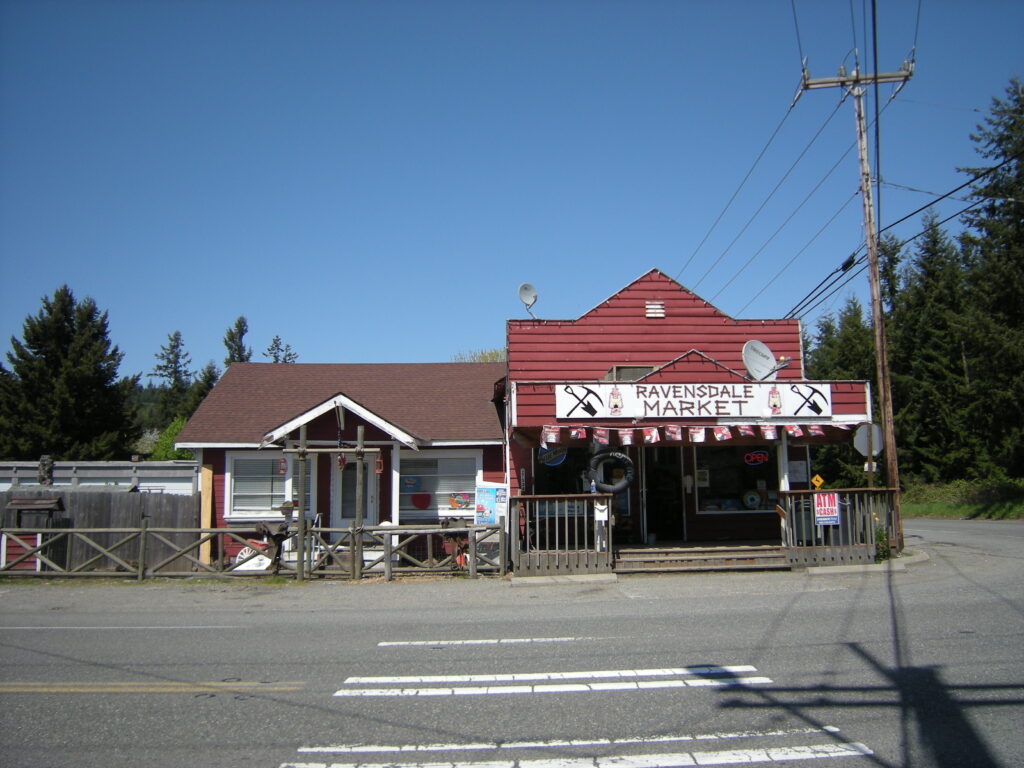
Ravensdale Market
The red building on the corner is one of the last original structures left in town. The Markus family bought it in 1908 and dragged it across the street with horses and skids to turn it into a grocery store.
Through Prohibition it belonged to a bootlegger who ran it as a front. It has been the market ever since, and it is still the only one.
Gracie Hansen Community Center
This was a 700 seat theater at the 1962 Seattle World’s Fair, home to Gracie Hansen’s revue Paradise International. When the fair closed, King County bought the building, took it apart and rebuilt it here.
Ravensdale’s community center is a repurposed burlesque theater. That is a real sentence.
Ravensdale Park
Ball fields, a meadow, and fifteen history signs along the walking trail. A volunteer put more than 1,200 hours into researching them.
Walk the loop and you get the whole town: the mines, the 1915 explosion, and a petrified clam from back when this was ocean floor.
Lake Retreat Camp
Camp and conference center on its own lake out Retreat-Kanaskat Road. My kid went this summer, which still makes me laugh a little.
Ravenwoods Farm
Event and wedding venue on SE Lake Retreat South Drive. A town this size does not get a venue district. It gets a farm.
Your backyard is 340 acres and a whitewater river.
Danville-Georgetown Open Space
340 acres two miles east of Maple Valley, with a 14 mile trail network shared by hikers, horses and mountain bikers under a trail-use agreement the two groups worked out themselves.
Rock Creek Natural Area
Borders Danville-Georgetown along its west side. Creek, second-growth forest, and the maps the local orienteering club runs its meets on.
Kanaskat-Palmer State Park
A camping park on a forested plateau above the Green River, with campsites, a group camp and yurts. The river runs Class II to Class IV through here, and the park is blunt about it: whitewater experts only.
Both names in Danville-Georgetown are local history. Danville was the old rail line through the north end. Georgetown was the mining camp in the southeast corner, and it was the rowdy half of Ravensdale: privately owned, outside the coal company’s rules, with something like eleven saloons strung along Kent-Kangley. It took its name from one of them, a 1912 tavern called The Royal George.
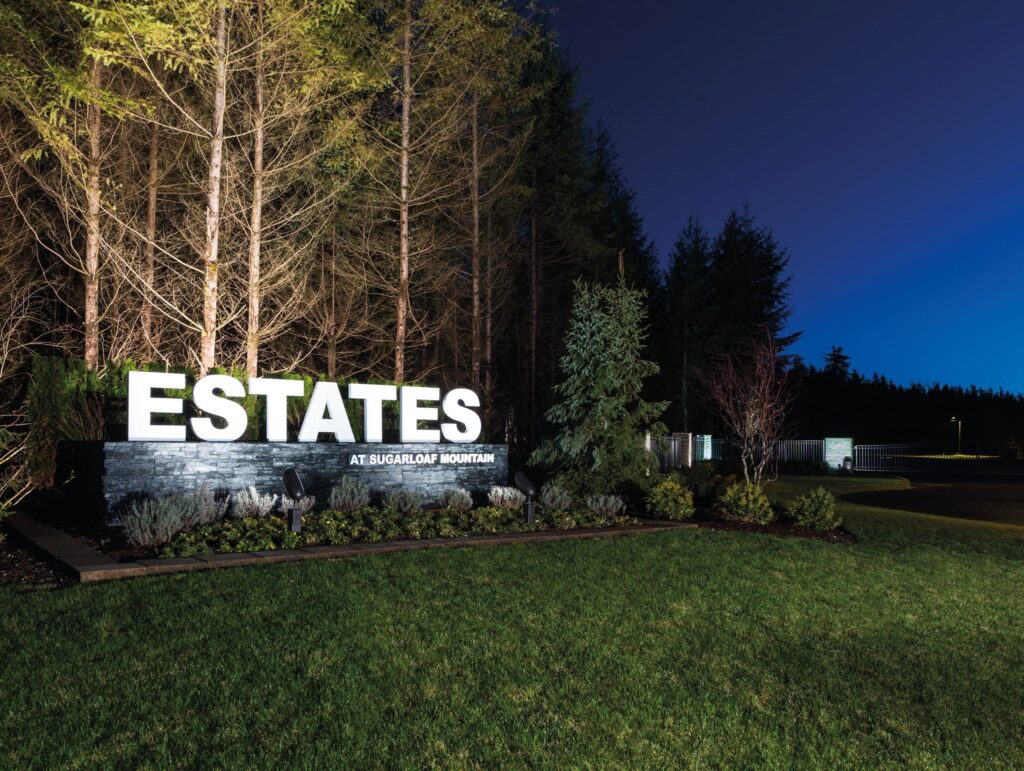
The Estates at Sugarloaf Mountain
This is the neighborhood I would drive you to first, and it is where my Ravensdale sale is. Newer homes on real acreage, backed up against the trees, with the quiet you came out here for in the first place.
Homes here are not cheap and I am not going to pretend otherwise. That is the trade in Ravensdale. You are buying land, trees and privacy, inside King County, ten minutes from a grocery store.
And yes, people out here have Bigfoot stories.
Full disclosure: I love Bigfoot lore. That is half of why this section exists. The other half is that people out here really do sit around telling these stories, so leaving it off a Ravensdale page felt wrong.
Washington leads the country in reported sightings. Sit around a fire long enough with someone who has lived out here a while and you will get one. I am not telling you it is real. I am telling you the stories are, and they follow a pattern.
The sounds, not the sightings
Most of it is what people hear. Folks on acreage backing up to the timber describe getting woken up by something low and bass-heavy coming out of the marshes. Not a cougar screech. Not coyotes.
Then there are the wood knocks: a hard crack like a log slammed against a tree. Knock back and sometimes something knocks back at you.
The logging roads
Old timber trails run east from here toward the Cascade foothills. The classic version is dusk, a gravel road, and a tall figure standing just past the tree line.
The detail everybody includes is that it does not bolt the way a bear bolts. It stands there. Then it walks off into the brush without hurrying.
Down in the Green River canyon
South of town the Green River cuts into a gorge that is genuinely hard to get into. Campers and fishermen down there talk about the feeling of being watched.
And about rocks landing in the water from the far bank, where nobody could be standing.
Black bears, wind in the cedars and a good storyteller cover most of it. Most of it. Buy a place out here and you will end up with your own version of this story eventually, and honestly, that is part of the deal.
Current Ravensdale Listings
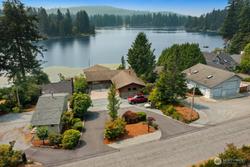
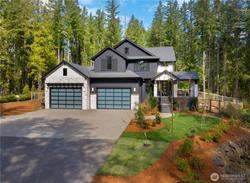
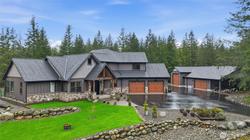
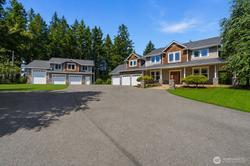
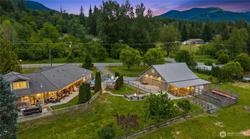
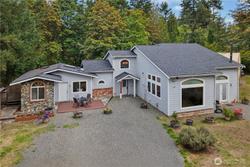
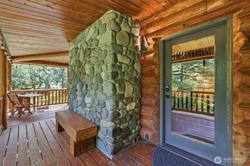
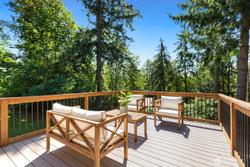
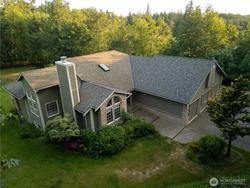
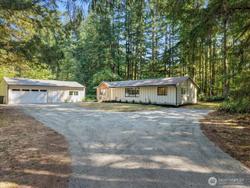
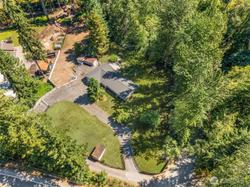
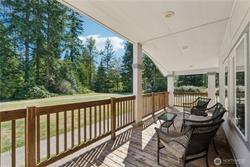
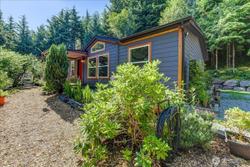
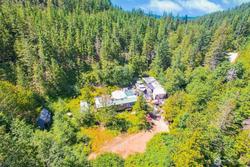
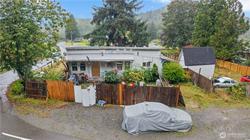
Ravensdale is tiny, there just aren’t many homes for sale here at any given time. Below are the active NWMLS listings in Ravensdale, WA at the time of writing, sorted high to low. No filler, no listings borrowed from neighboring towns.
Ravensdale Resources
Ravensdale doesn’t have its own city government or chamber of commerce, here’s who actually serves the area.
Ravensdale’s History
HistoryLink.org’s account of the 1915 mine disaster and the town’s coal-mining roots, the fullest record of Ravensdale’s early years.
King County
Ravensdale is unincorporated, so King County handles roads, permitting, and county services for the whole area.
Tahoma School District
Ravensdale students attend Tahoma schools, the same district that serves neighboring Maple Valley.
Maple Valley-Black Diamond Chamber
The nearest regional chamber of commerce, covering Ravensdale along with Maple Valley and Black Diamond.
Read the Journal
Explore the Rooted Series
See every city guide, side by side, and find the one that fits how you actually live.
Read the guide →A Practical Seasonal Home Maintenance Checklist
A simple room-by-room routine for keeping any home running smoothly, whatever the season.
Read the checklist →The Sunday Home Reset
A calmer, more intentional way to reset your home and your week.
Read the article →Thinking about Ravensdale?
Not much comes up for sale out here, and when it does it moves. Tanya can tell you what is actually available, on-market and off.
Talk to Tanya About RavensdaleKeep Exploring the Rooted Series
Ravensdale updates, occasionally
New listings and local notes from Tanya, straight to your inbox, no spam, unsubscribe anytime.