

Moving to Renton, WA
A Practical Guide to Planning Your Move.
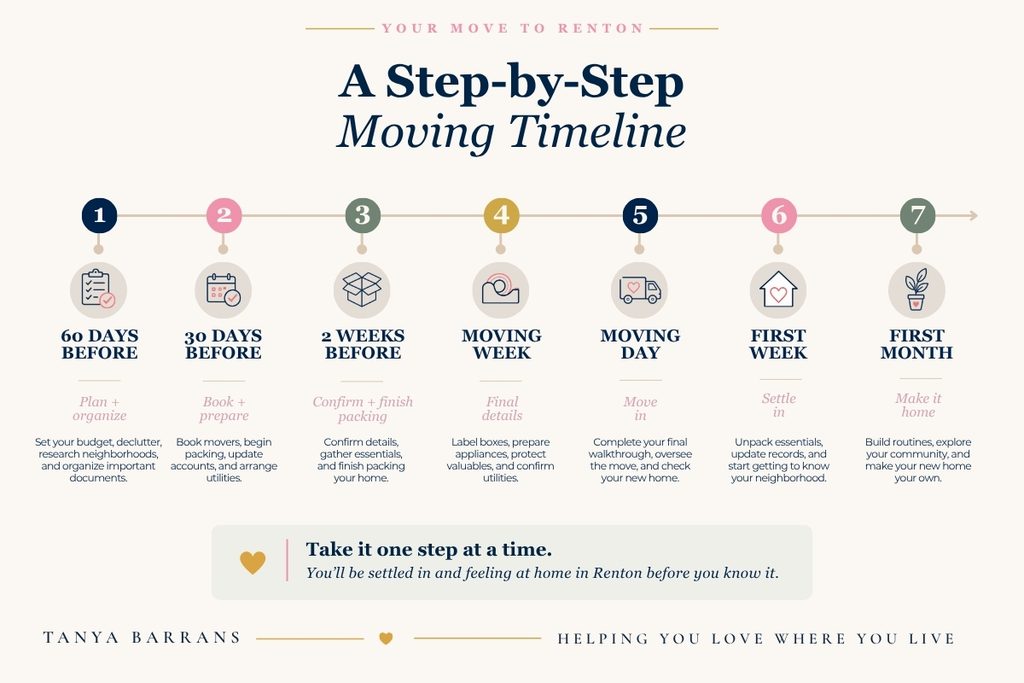
A step-by-step guide to moving to Renton, WA — from two months out through your first month in your new home.
Moving to a new city takes more than packing boxes. There are decisions to make, paperwork to organize, a new home to set up, and eventually, a new community to get to know.
If you’re moving to Renton, this guide walks you through the process from about two months before moving day through your first month in your new home.
Think of it as a timeline you can come back to as your move gets closer. You don’t have to do everything at once, just focus on what needs your attention next and check things off as you go.
By the time you’re settled in, you’ll have the practical pieces handled and a little more space to start making Renton feel like home.
Before You Start
Before you start packing, take a little time to plan the move itself. A few decisions made early can make the weeks ahead feel much more manageable.
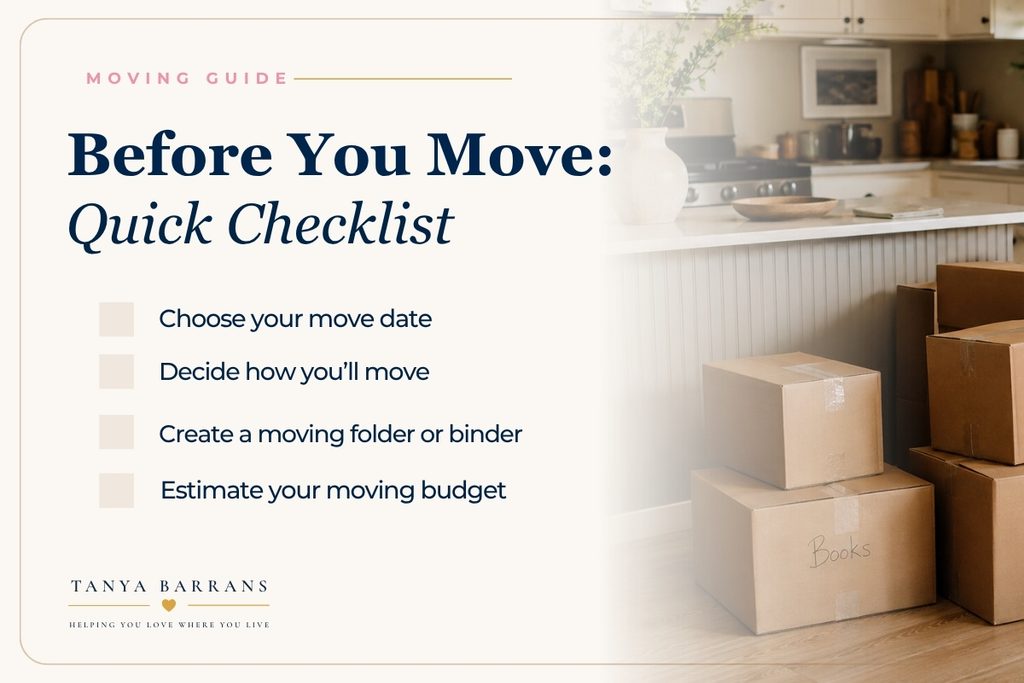
Choose Your Move Date
Start by deciding when you want to move.
Your move date affects almost everything that follows, including booking movers, setting up utilities, giving notice to your landlord, and scheduling time off from work.
If your move date is flexible, think about school schedules, work commitments, and any deadlines connected to buying or renting your new home.
Decide How You’ll Move
Next, think about how you’ll get your belongings to your new home.
Some people hire a full-service moving company. Others rent a moving truck or ask family and friends for help.
The best option depends on your budget, the distance you’re moving, and how much help you’ll need.
Create a Moving Folder
Keep your moving information in one place. This can be a folder, binder, or digital document where you save:
- Receipts
- Contracts
- Utility information
- Important phone numbers
- Notes
Having everything together makes it easier to find what you need when you need it.
Estimate Your Moving Budget
Moving costs can add up quickly.
Besides transportation, you may also need to budget for:
- Moving supplies
- Professional movers
- Utility deposits
- Cleaning services
- Storage, if needed
- New furniture or household items
Planning these expenses early can help you avoid surprises later.
Tanya’s Insight: Moving gets a lot easier when you give yourself some breathing room. Start planning before you start packing, and give yourself a realistic timeline rather than trying to handle everything at once.
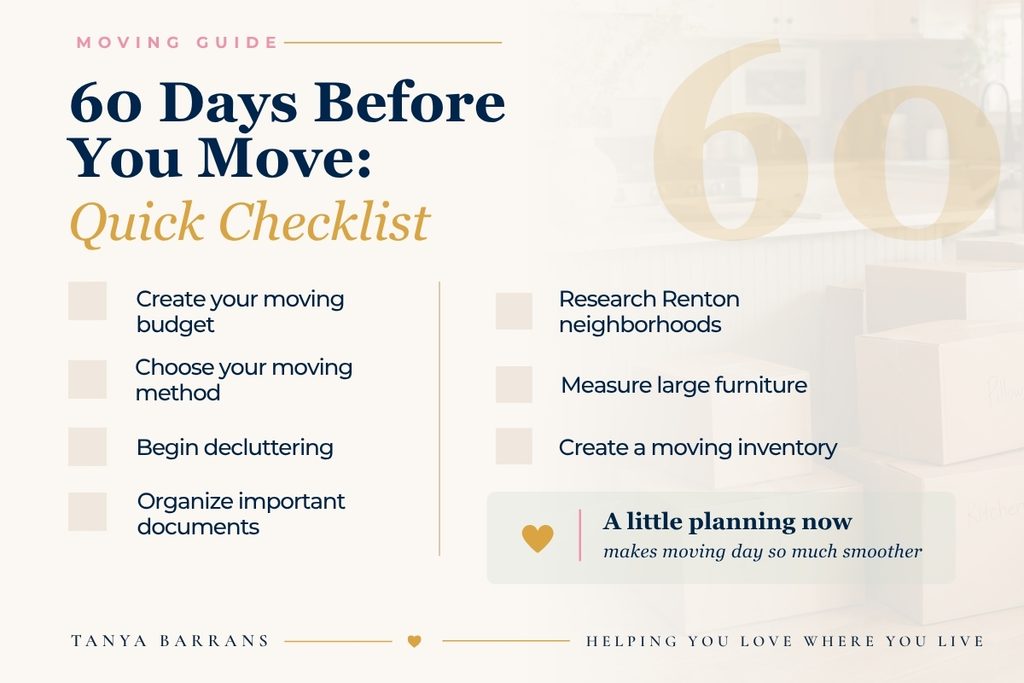
60 Days Before You Move
About two months before moving day, it’s time to start planning.
You don’t need to pack everything yet. This is the stage for making decisions, organizing important information, and taking care of the things that may take a little longer than expected.
Starting early gives you more flexibility and can help keep the last few weeks from feeling rushed.
Create a Moving Budget
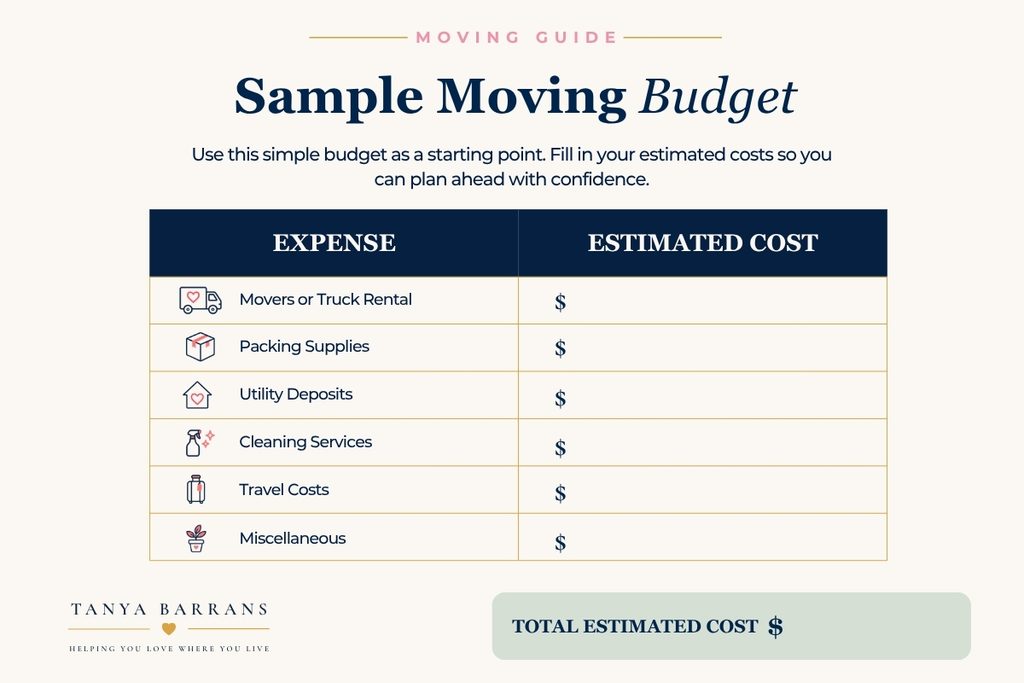
Moving expenses can add up quickly, especially if you’re relocating from another city or state.
Start with a simple budget that includes the costs you already expect, along with some room for expenses you may not have planned for.
Common moving expenses include:
- Moving company or truck rental
- Packing supplies
- Utility deposits
- Cleaning services
- Storage fees
- Travel expenses
- New furniture or household items
Having a budget in place gives you a clearer picture of what the move may cost and helps you plan ahead.
Decide How You’ll Move
One of the first decisions you’ll make is how you’ll get your belongings to your new home.
Depending on your situation, you might:
- Hire a professional moving company
- Rent a moving truck
- Use portable storage containers
- Ask family or friends to help
If you’re moving during spring or summer, consider booking your movers early. Those months are often among the busiest for moving.
Tanya’s Insight: Moving companies can fill their schedules weeks in advance. If you already know your move date, it’s worth requesting quotes early. Booking ahead can also give you more flexibility when you’re choosing a moving date.
Start Decluttering
Moving is a good opportunity to take a second look at what you actually want to bring with you.
Go through your home one room at a time and separate your belongings into four groups:
- Keep
- Donate
- Sell
- Recycle or dispose
Moving fewer things can mean less to pack, move, and unpack once you arrive.
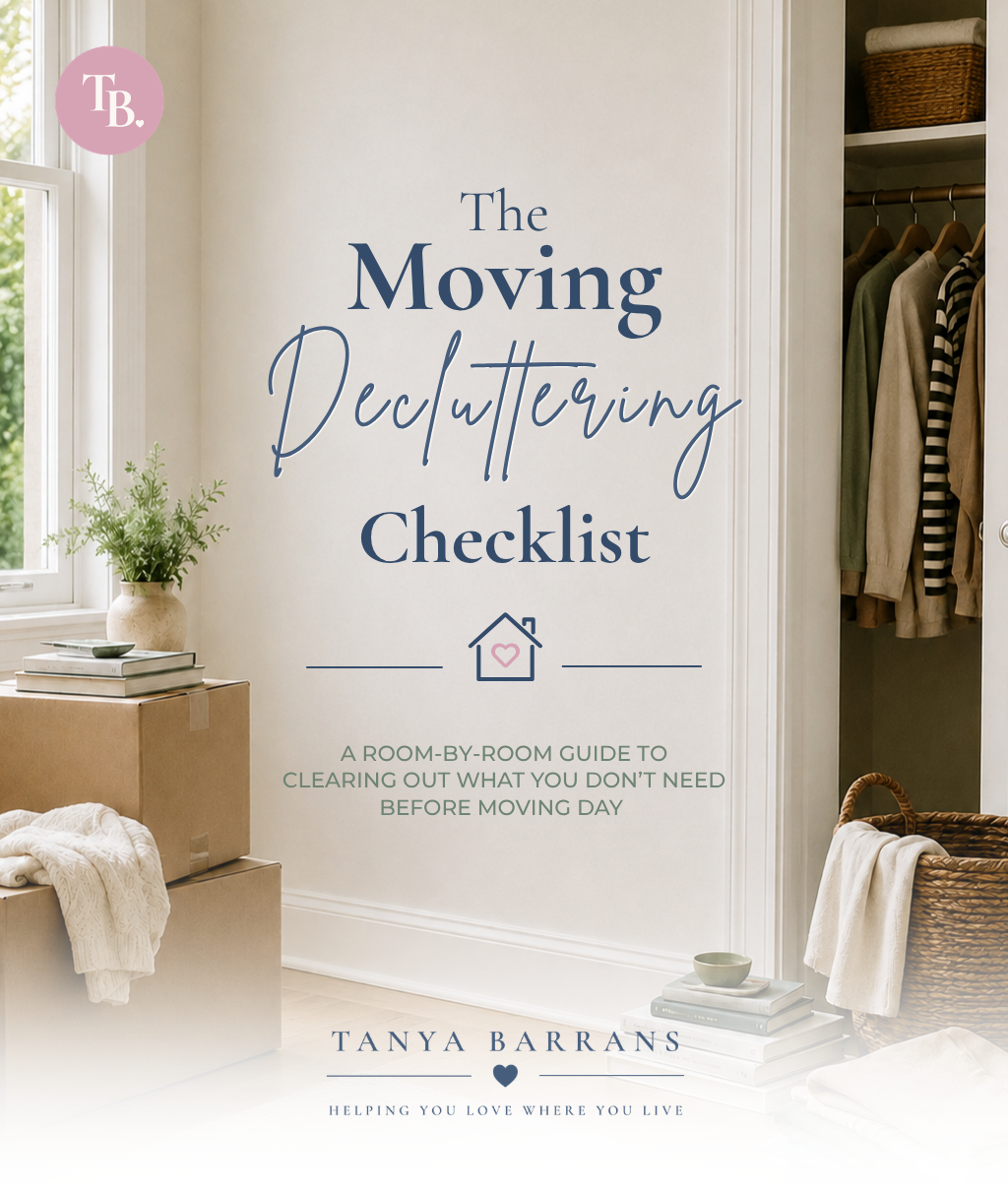
Free 11-page printable
The Moving Decluttering Checklist
A room-by-room guide for deciding what to keep, sell, donate, recycle, or leave behind before you start packing.
Get the Decluttering ChecklistEnter your email to unlock the download and receive occasional useful home and local updates. Unsubscribe anytime.
Organize Important Documents
Keep important documents together in one folder that stays with you during the move rather than being packed away in a moving box.
This may include:
- Identification
- Financial records
- Insurance documents
- Medical records
- School records
- Home purchase or lease paperwork
- Moving contracts
Having these documents together makes them easier to find when you need them.
Research Renton’s Neighborhoods
If you’re still deciding where to live, this is a good time to learn more about the different parts of Renton.
Think about what matters most to you and your household, such as:
- Commute time
- Schools
- Parks
- Shopping
- Restaurants
- Walkability
- Access to major highways
You don’t have to decide everything at once. Start by identifying the things that matter most to your day-to-day life, then use those priorities to narrow down your options.

Measure Large Furniture
Before moving day, measure your larger pieces of furniture and compare those measurements with the doorways, hallways, staircases, and rooms in your new home.
A few minutes with a measuring tape now can help you avoid surprises when it’s time to move in.
Consider measuring:
- Sofas
- Beds
- Dining tables
- Desks
- Refrigerators
- Washers and dryers
Create a Moving Inventory
Start a simple inventory of the items you’ll be moving.
It doesn’t need to be complicated. A spreadsheet, checklist, or notes app can work just fine.
For each room, keep track of:
- Large furniture
- Electronics
- Valuable items
- Fragile items
- Number of boxes
An inventory can help you stay organized while packing and make it easier to keep track of what arrives at your new home.
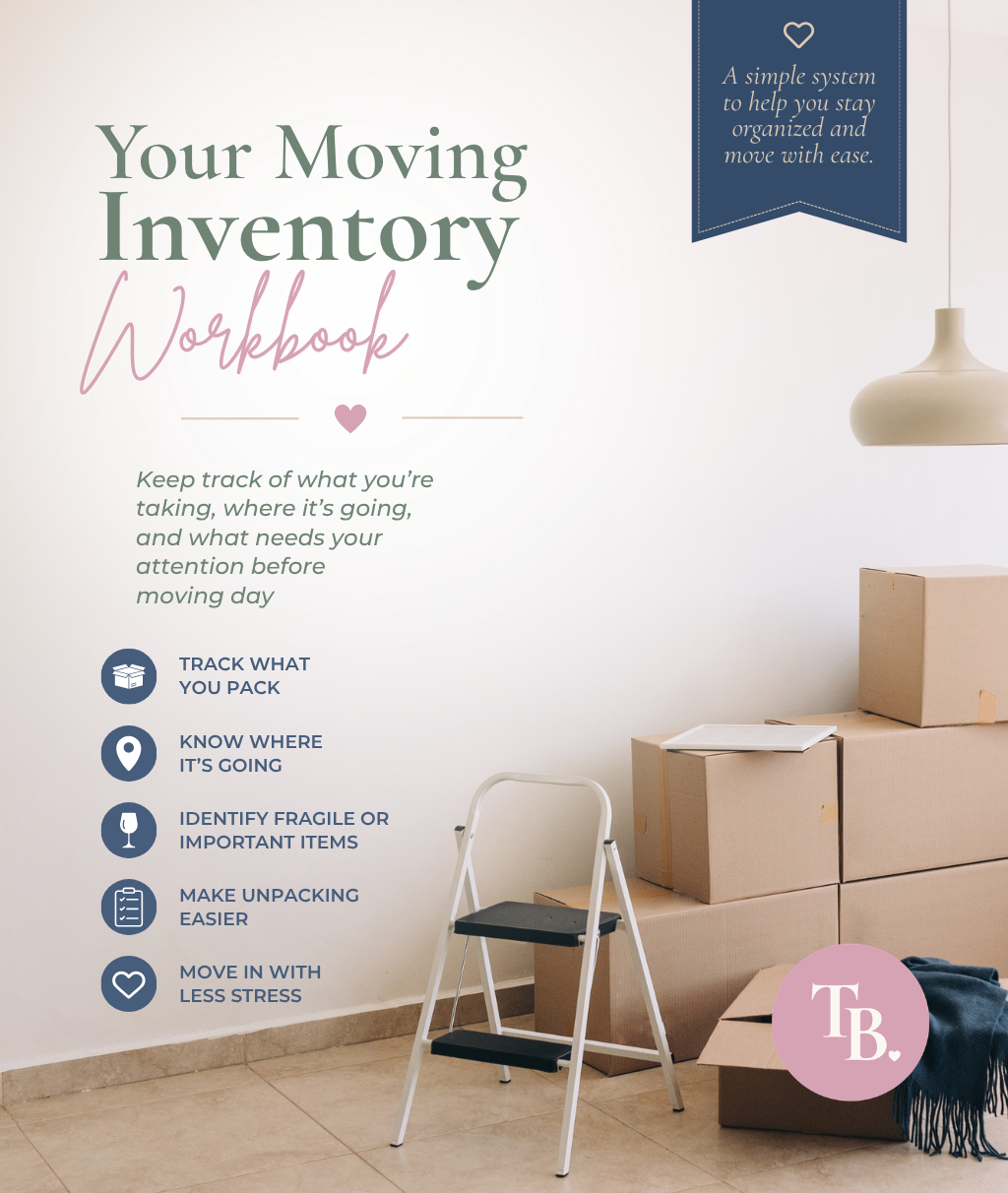
Free 17-page workbook
Your Moving Inventory Workbook
Track boxes, fragile items, open-first essentials, room destinations, and the details that make unpacking much easier.
Get the Inventory WorkbookEnter your email to unlock the download and receive occasional useful home and local updates. Unsubscribe anytime.
A Few Common Moving Mistakes
A little planning now can help you avoid some of the more common problems later.
- Waiting too long to book movers
- Packing items you no longer use
- Forgetting to measure large furniture
- Keeping important documents inside moving boxes
- Underestimating moving expenses
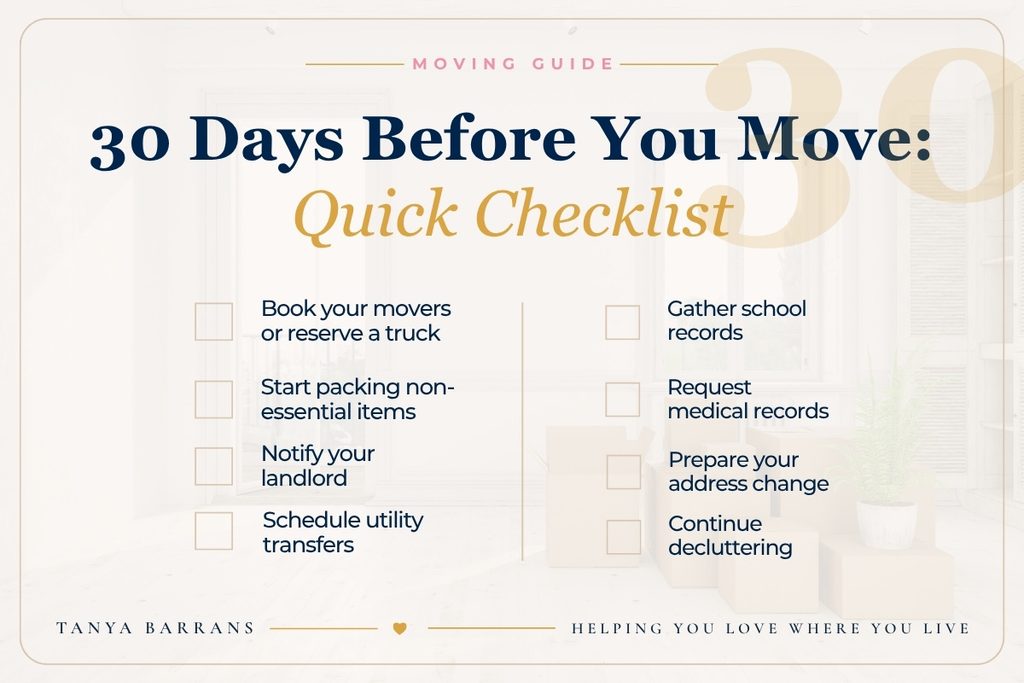
30 Days Before You Move
A month before moving day, the move starts to feel a lot more real. This is when the planning you’ve done begins turning into actual preparation.
By now, you should have a move date and a general plan. The next step is confirming services, packing more consistently, and taking care of important accounts and paperwork before the move.
Book Your Movers
If you haven’t booked your movers yet, now is the time.
Contact a few companies, compare estimates, and confirm your moving date. If you’re moving yourself, reserve your truck or trailer as early as possible.
Before booking, ask about:
- Pricing
- Insurance coverage
- Cancellation policies
- Arrival window
- Additional fees
Tanya’s Insight: Always ask for a written estimate before hiring a moving company. It helps you understand what’s included and can help avoid unexpected charges.
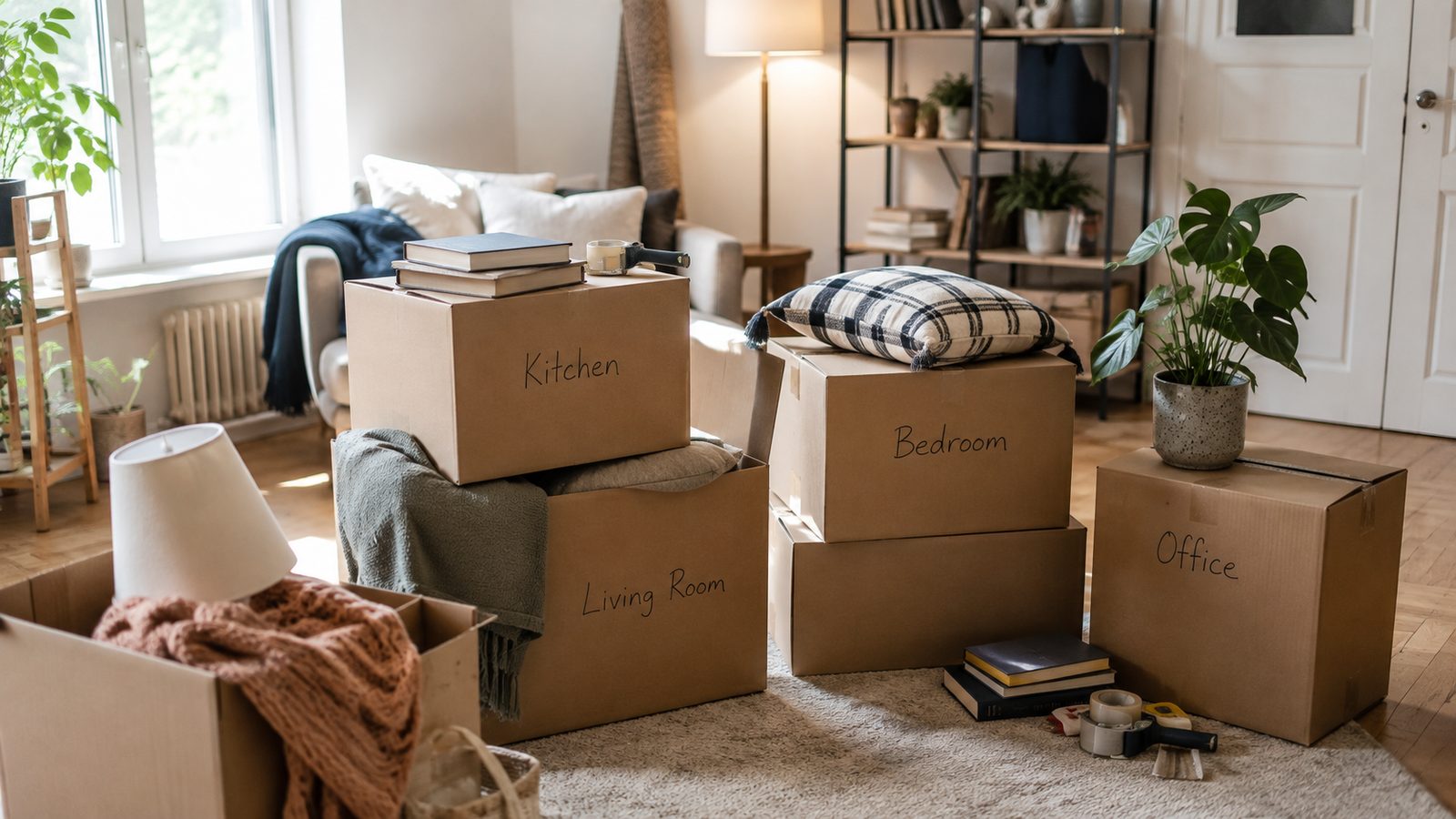
Start Packing
You don’t need to pack your everyday essentials yet. Start with the things you won’t miss over the next few weeks.
Consider starting with:
- Seasonal clothing
- Holiday decorations
- Books
- Home décor
- Extra kitchen items
- Storage items
Label each box with the room it belongs in and a short description of what’s inside.
Notify Your Landlord
If you’re renting, review your lease and provide notice according to your agreement.
Before moving out:
- Schedule a final walkthrough.
- Ask about your security deposit.
- Confirm your move-out date.
- Return keys as instructed.
Schedule Utility Transfers
Contact your utility providers and schedule your service changes.
Arrange for utilities at your current home to end after you move out and for services at your new home to begin before moving day.
Common utilities include:
- Electricity
- Water
- Natural gas
- Internet
- Trash and recycling
Gather School Records
If you’re moving with children, contact their current school and request any records you’ll need.
These may include:
- Academic records
- Immunization records
- Transcripts
- Enrollment paperwork
Starting early can help make the transition smoother.
Request Medical Records
If you’re changing healthcare providers, request copies of important medical records.
Don’t forget to refill prescriptions that you may need during the move.
Update Your Address
Start making a list of the places that need your new address.
This may include:
- Banks
- Credit card companies
- Insurance providers
- Employer
- Subscription services
- Online shopping accounts
You can also begin preparing to update your mailing address with USPS.
Continue Decluttering
As you pack, you’ll probably find more things you no longer want.
Before putting something in a box, ask yourself if it’s worth moving.
Donate, recycle, or dispose of anything you no longer use.
A Few Common Mistakes
A little planning now can help you avoid some of the last-minute stress that comes with moving.
- Waiting until the last week to pack
- Forgetting to transfer utilities
- Not labeling boxes
- Missing your lease notice deadline
- Forgetting to update important accounts
2 Weeks Before You Move
You’re getting close now. Most of the big decisions should already be made.
The next two weeks are about tying up loose ends, finishing the packing, and making sure the things you’ll need immediately are easy to find.
Take a little time each day to complete a few tasks rather than leaving everything until the last minute.
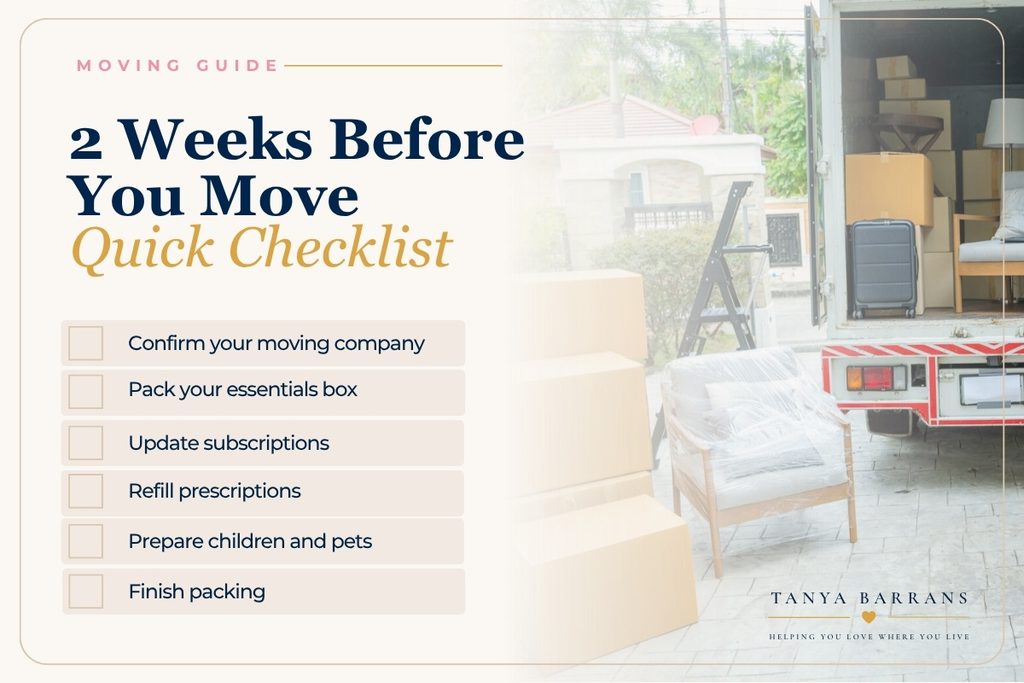
Confirm Your Moving Company
Contact your moving company and confirm the details of your reservation.
Double-check:
- Moving date
- Arrival time
- Pickup address
- Delivery address
- Contact information
- Payment method
If you’re moving yourself, confirm your truck reservation and pickup instructions.
Tanya’s Insight: Save your mover’s phone number in your contacts. If plans change on moving day, you’ll be able to reach them quickly.
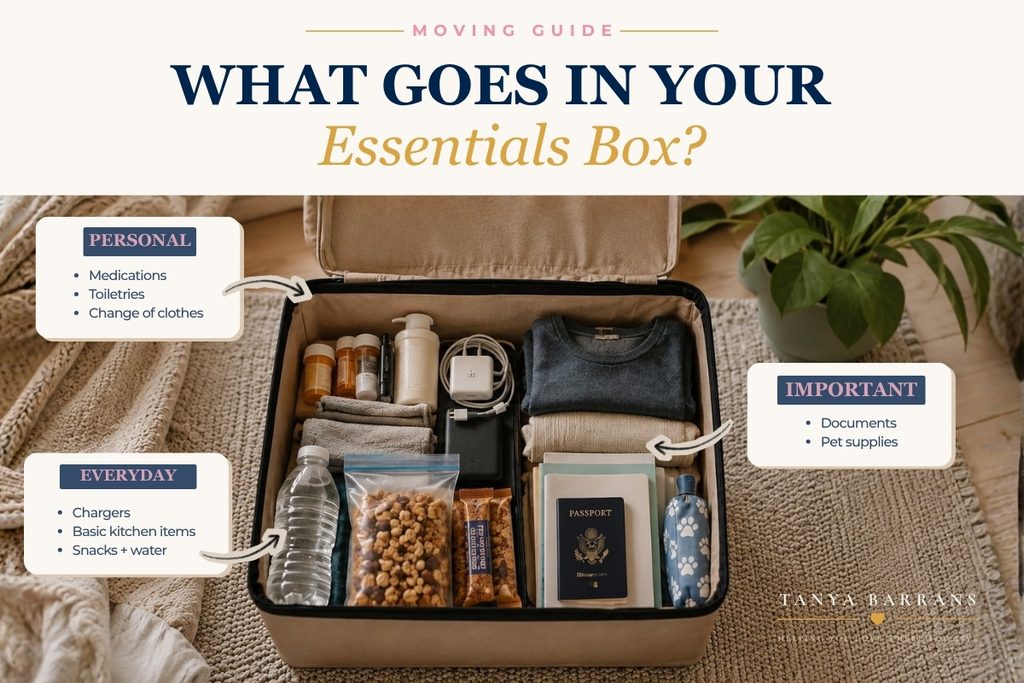
Pack an Essentials Box
Set aside a box or suitcase with the things you’ll need right away.
Think about what you’d want to have with you if everything else were packed away for the night.
Include things like:
- Medications
- Chargers
- Toiletries
- Change of clothes
- Basic kitchen items
- Snacks
- Water
- Pet supplies
- Important documents
Keep this box with you instead of loading it onto the moving truck.
Update Your Subscriptions
Take a few minutes to update your mailing address for subscriptions and memberships.
Examples include:
- Streaming services
- Meal deliveries
- Online shopping accounts
- Magazine subscriptions
- Loyalty programs
This helps prevent missed deliveries after you move.
Refill Prescriptions
If you take prescription medication, refill it before moving day.
Having what you need on hand means one less thing to worry about while you’re unpacking and settling into your new home.
Prepare Children and Pets
Moving can be stressful for children and pets.
Talk with your family about what to expect and keep familiar items nearby during the move.
If possible, arrange childcare or pet care on moving day so you can focus on the move.

Finish Packing
By the end of this week, almost everything should be packed.
Leave out only the items you’ll use every day.
As you finish packing:
- Label every box.
- Seal boxes securely.
- Keep similar items together.
- Separate fragile items.
A Few Common Mistakes
A little preparation now can make the final days much easier.
- Forgetting to confirm moving details
- Packing medications inside moving boxes
- Leaving too much packing for the last few days
- Forgetting to label boxes
Moving Week
Moving week is here! At this point, the big planning should be behind you. Now it’s about taking care of the final details and keeping the things you’ll need close at hand.
Take your time and work through your checklist. Small tasks completed now can make moving day much less stressful.
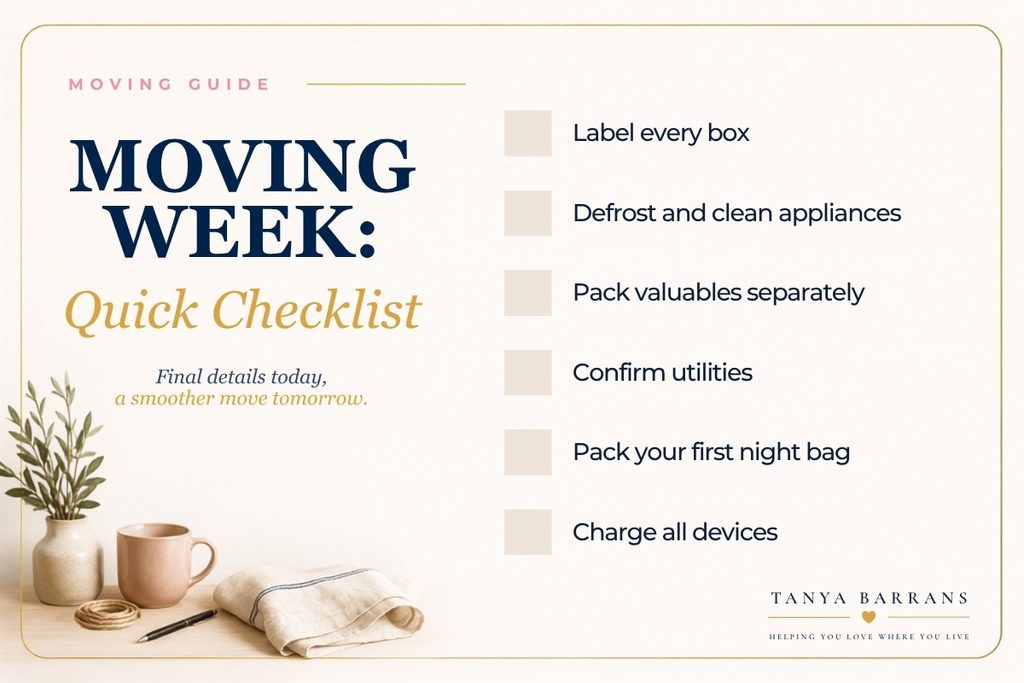
Label Every Box
Every box should have:
- Destination room
- Brief description
- Fragile label if needed
This makes unloading and unpacking much easier.
Defrost and Clean Appliances
If you’re bringing your refrigerator or freezer, unplug it at least 24 hours before moving day.
Give it time to defrost and dry completely before loading it onto the truck.
Clean any appliances you’ll be taking with you.
Pack Valuables Separately
Keep valuable and irreplaceable items with you.
This includes:
- Passports
- Birth certificates
- Jewelry
- Cash
- Laptops
- External hard drives
- Family photos
Avoid placing these items on the moving truck.
Confirm Utility Activation
Double-check that utilities at your new home will be active before you arrive.
This includes:
- Electricity
- Water
- Natural gas
- Internet
If possible, schedule service to begin one day before your move.
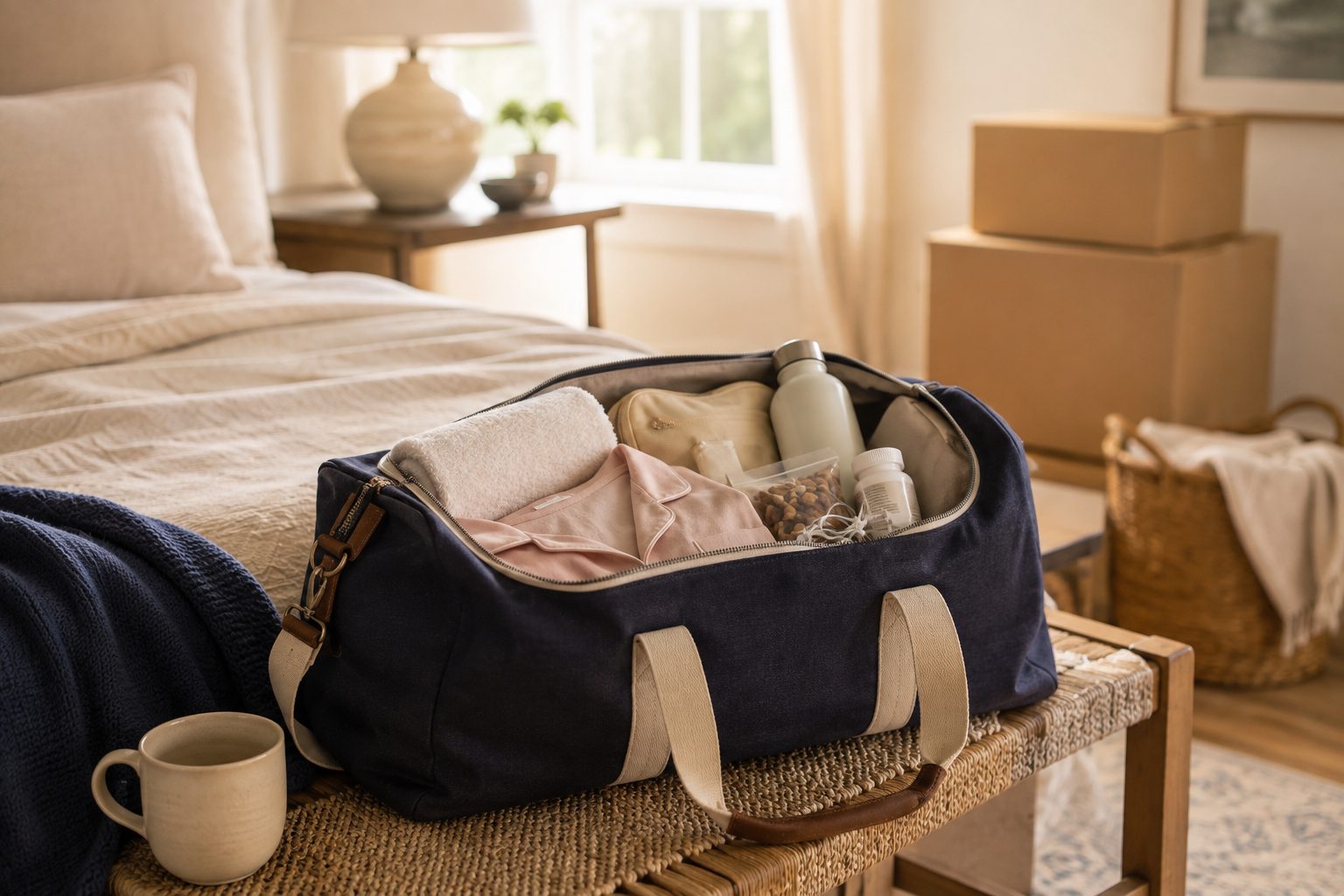
Prepare Your First Night Bag
Your first night should be simple.
Pack one bag with everything you’ll need before you start unpacking.
Include:
- Pajamas
- Towels
- Toiletries
- Chargers
- Medications
- Snacks
- Coffee or tea
- Basic kitchen supplies
Keep this bag with you rather than loading it onto the moving truck.
Charge Your Devices
Charge your phone, laptop, portable batteries, and any other devices you’ll need during the move.
Having a fully charged phone makes it easier to communicate with movers, family, and service providers.
A Few Common Mistakes
A little preparation now can make moving day much easier.
- Forgetting to charge devices
- Packing important documents
- Not checking utility activation
- Waiting until moving day to organize essentials
Moving Day
After weeks of planning, moving day is finally here!
You don’t need to unpack everything today. Your job is simply to get through the day safely, make sure everything arrives, and give yourself a little time to settle in.
Take your time and work through one task at a time.
Do a Final Walkthrough
Before leaving your old home, walk through every room one last time.
Open closets, cabinets, drawers, the garage, and any storage areas.
It’s easy to overlook small items once the moving truck is loaded, so take a few extra minutes to make sure nothing is left behind.
Check Utilities
Before leaving, make sure you’ve completed any final utility tasks.
If needed:
- Turn off lights.
- Adjust the thermostat.
- Shut off water if required.
- Confirm utility services have been transferred.
If you’re moving into your new home today, check that the utilities are working when you arrive.
Keep Important Documents With You
Keep important documents with you rather than packing them on the moving truck.
This may include:
- Identification
- Closing documents
- Lease agreement
- Insurance information
- Moving contracts
- Medical records
- Prescription medications
Keeping these items nearby makes them easy to access if needed.
Supervise the Loading Process
As movers load the truck, keep an eye on valuable and fragile items.
If you created a moving inventory, use it to make sure everything is loaded before the truck leaves.
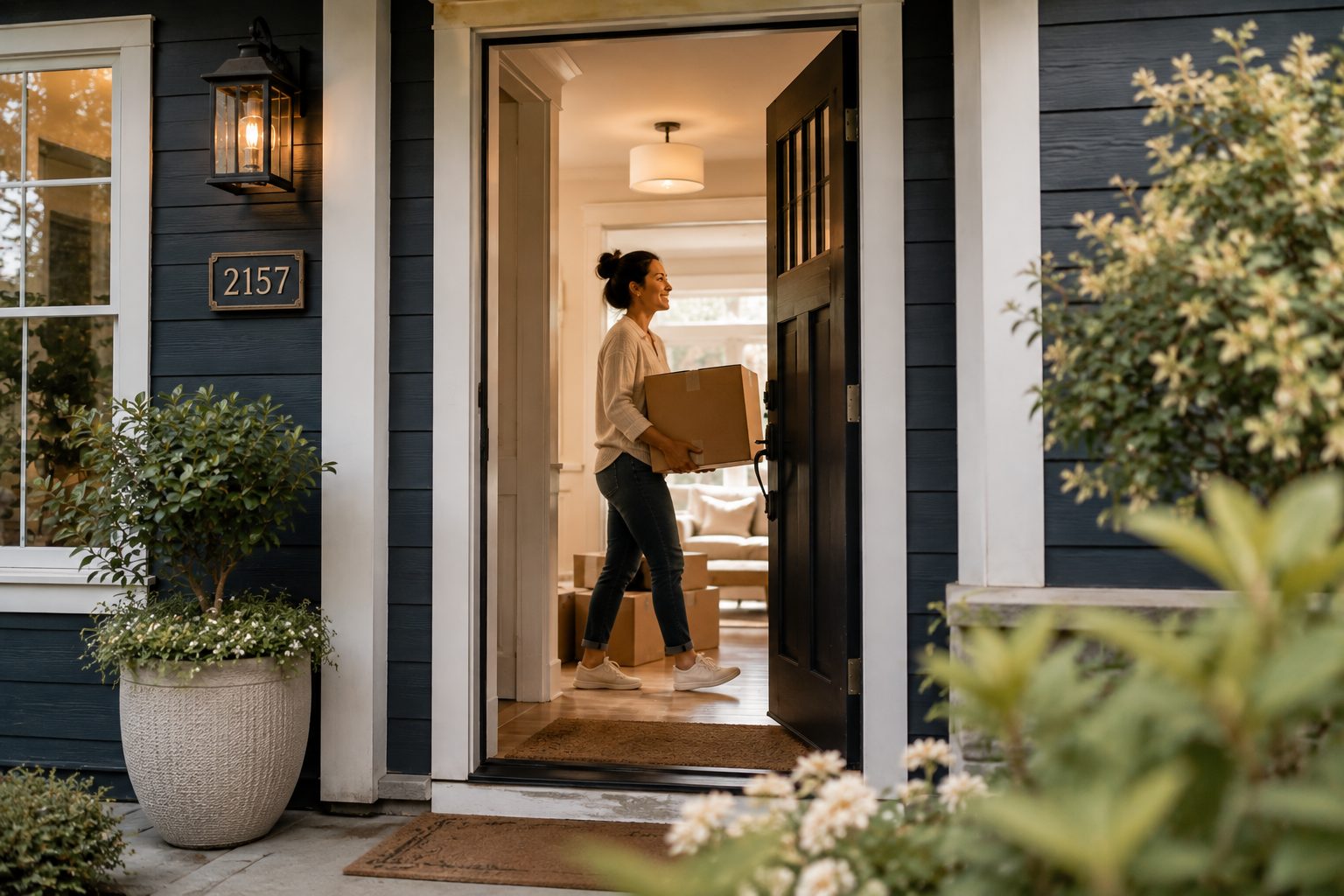
Arrive at Your New Home
Before unloading begins, take a quick walkthrough of your new home.
Check that:
- Utilities are working.
- Doors and windows lock properly.
- Smoke and carbon monoxide detectors are working.
- Major appliances are in place.
- Floors and walls don’t have unexpected damage.
If you’re buying a home, compare the property’s condition with your final walkthrough.
Guide the Movers
As boxes come inside, direct them to the correct rooms.
This makes unpacking much easier later.
If you labeled your boxes clearly, the process will move much faster.
Check Large Furniture
Before movers leave, inspect large furniture for damage.
If anything appears damaged, document it with photos and notify the moving company as soon as possible.
Celebrate the Milestone
Moving day is a big accomplishment.
You don’t need to unpack everything today.
Focus on getting settled, ordering a meal, and getting a good night’s sleep. The rest can wait until tomorrow.
Tanya’s Insight: Don’t feel pressured to unpack the entire house on your first day. Start with the essentials and work through one room at a time over the next few days.
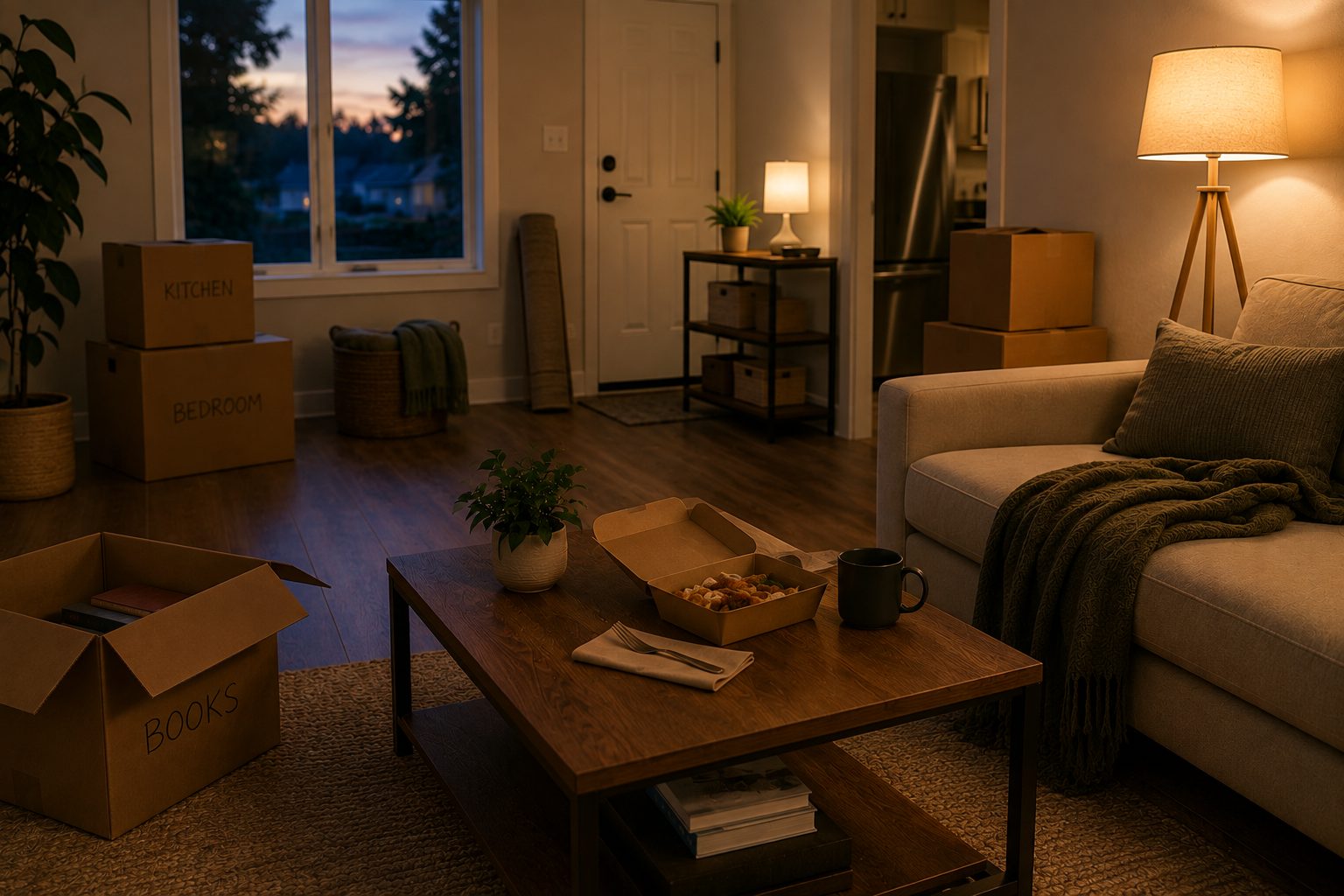
Your First Night
The hardest part is over.
You’ve made it to your new home. Tonight doesn’t need to be about unpacking everything or getting every room in order.
Focus on the basics, make the space comfortable, and give yourself a chance to rest.
Unpack the Essentials
Start with the things you’ll need right away.
This may include:
- Bedding
- Toiletries
- Towels
- Chargers
- Medications
- Basic kitchen supplies
- Pet supplies
Everything else can wait until tomorrow.
Test the Basics
Before settling in for the night, make sure the basic systems in your home are working.
Check:
- Light switches
- Faucets
- Toilets
- Heating and air conditioning
- Kitchen appliances
- Internet connection, if already installed
If something isn’t working, make a note so you can address it later.
Keep Dinner Simple
After a long moving day, you probably won’t feel like cooking.
Order takeout from a local restaurant or prepare something simple. It’s one less thing to worry about while you’re settling in.
Get a Good Night’s Sleep
There’s no need to finish everything tonight.
A good night’s sleep will give you a fresh start for the days ahead.
The boxes will still be there tomorrow.
First Week in Renton
Welcome to Renton!
The moving truck is gone, the boxes are inside, and you’re officially starting your next chapter.
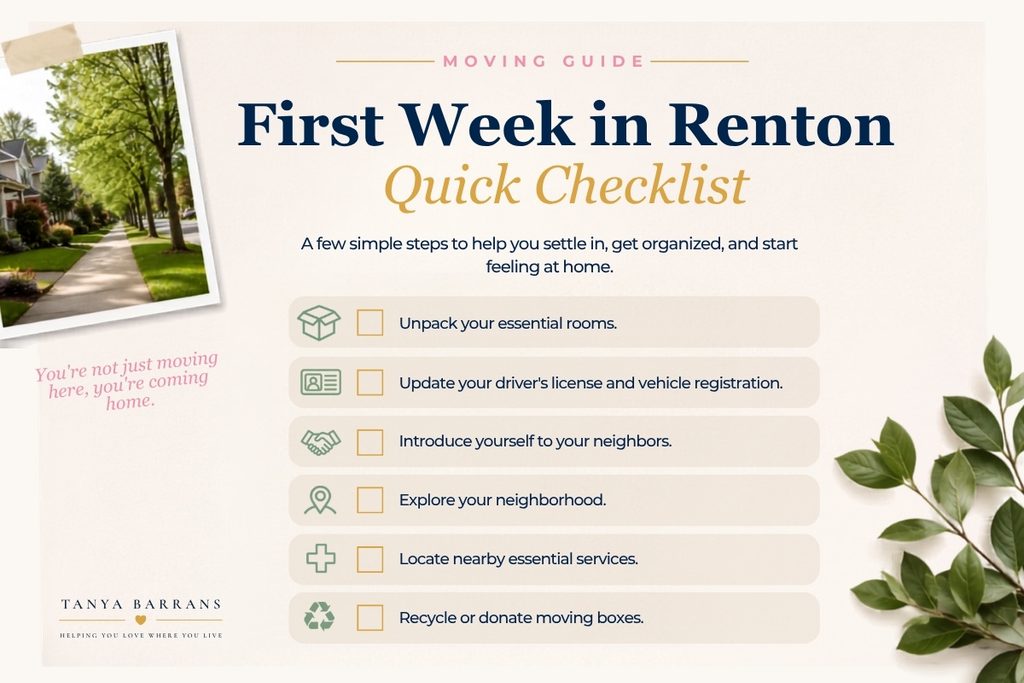
You don’t need to unpack everything this week. Focus on making your home functional, taking care of a few important details, and getting familiar with your new community.
Unpack One Room at a Time
Trying to unpack the entire house at once can feel overwhelming.
Instead, prioritize the rooms you’ll use every day and work through them one at a time.
A suggested order is:
- Bedroom
- Bathroom
- Kitchen
- Living room
- Home office
- Storage areas
Completing one room at a time helps you see progress and makes the process feel more manageable.
Update Your Driver’s License and Vehicle Registration
If you’ve moved from another city or state, you’ll likely need to update your driver’s license, vehicle registration, and other official records.
Check the current requirements and deadlines so you can plan ahead.
Meet Your Neighbors
One of the easiest ways to start feeling at home is to introduce yourself to the people who live nearby.
You don’t need a formal introduction. A simple hello or quick conversation while you’re walking through the neighborhood can go a long way toward building connections.
Tanya’s Insight: One of the best parts of living in Renton is its strong sense of community. Getting to know your neighbors can help your new neighborhood feel more like home faster.
Learn Your Neighborhood
Take some time to explore the area around your home.
Start by finding the places you’ll use regularly, such as:
- Grocery stores
- Parks
- Coffee shops
- Pharmacies
- Gas stations
- Restaurants
- Schools
- Walking trails
Locate Important Services
It’s helpful to know where essential services are before you need them.
Consider locating:
- Urgent care clinics
- Hospitals
- Veterinary clinics
- Pharmacies
- Fire stations
- Police stations
Having these locations saved on your phone can provide peace of mind.
Break Down Moving Boxes
As you finish unpacking, recycle or donate moving boxes you no longer need.
If the boxes are still in good condition, consider giving them away to someone else who is preparing for a move.
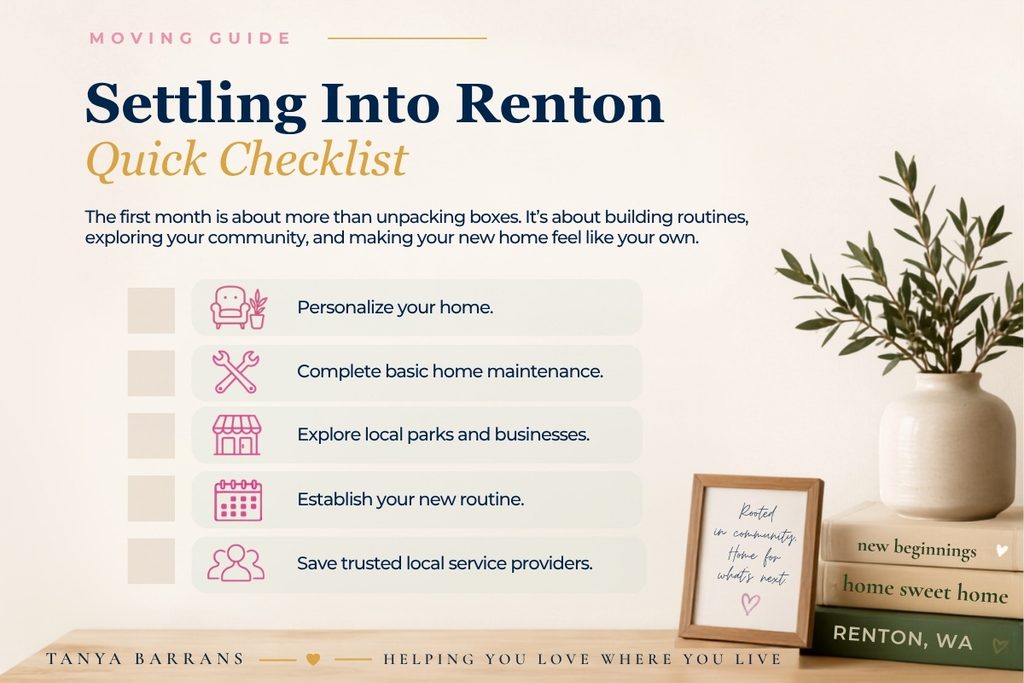
Settling Into Renton (First Month)
The first few weeks in a new city are about more than unpacking boxes. They’re about building routines, getting familiar with your surroundings, and slowly making your new home feel like your own.
You don’t need to have everything figured out right away. Give yourself time to settle in, explore your neighborhood, and discover what makes Renton feel like home.

Personalize Your Home
Once the essentials are unpacked, start making the space feel like yours.
Simple touches can make a big difference, such as:
- Hanging artwork
- Organizing storage
- Decorating each room
- Planting flowers or updating landscaping
There’s no need to rush. Let your home come together over time.
Complete Home Maintenance Tasks
If you’ve purchased a home, now is a good time to complete a few basic maintenance tasks and get familiar with how your home works.
Consider:
- Changing HVAC filters
- Testing smoke and carbon monoxide detectors
- Locating your main water shut-off valve
- Creating a home maintenance schedule
- Replacing door lock codes or rekeying locks if needed
If you’re not sure what needs attention, this is also a good time to make a list of questions for a trusted home professional.

Explore the Community
Now that the move is behind you, give yourself some time to get to know Renton.
Start with the places you’ll actually use. You might explore:
- Local parks
- Farmers markets
- Downtown Renton
- Community events
- Local restaurants
- Coffee shops
- Libraries
The more familiar your surroundings become, the more quickly Renton can start to feel like home.
Establish Your New Routine
As life settles down, begin creating your everyday routine in your new home.
Think about:
- Your morning commute
- Grocery shopping
- Exercise
- Weekend activities
- Local favorites
You don’t need to figure everything out at once. Finding a rhythm that works for you is part of making your new house feel like home.
Keep Building Your Local Network
Over the next few months, you’ll probably need recommendations for everything from home repairs to everyday services.
Instead of starting from scratch every time, keep a list of trusted local professionals as you find them.
Whether you need a plumber, electrician, landscaper, or cleaning service, having a few reliable contacts on hand can make homeownership a little easier.
A Few Common Mistakes
- Feeling like everything has to be finished immediately.
- Ignoring small maintenance tasks.
- Not exploring the community.
- Waiting until there’s a problem to find local service providers.
A new home takes time to feel familiar. Give yourself some room to settle in.
Frequently Asked Questions
How far in advance should I start planning my move?
If possible, start planning about two months before your move. This gives you time to create a budget, hire movers, organize paperwork, and pack without feeling rushed.
If you’re moving on a shorter timeline, focus on the essentials first and tackle each task one at a time.
When should I book a moving company?
As soon as you know your moving date.
Moving companies can book up quickly, especially during spring and summer. Booking early gives you more availability and time to compare estimates.
What’s the first thing I should unpack?
Start with the rooms you’ll use right away.
For many people, that means:
- Bedroom
- Bathroom
- Kitchen
Having these spaces ready first can make your first few days much more comfortable.
How much does it cost to move?
Every move is different, and your total cost will depend on several factors, including:
- Distance
- Home size
- Number of belongings
- Moving services
- Time of year
Creating a moving budget early can help you plan for these expenses and avoid surprises.
What should I keep with me on moving day?
Keep important items with you instead of loading them onto the moving truck.
This can include:
- Identification
- Important documents
- Medications
- Chargers
- Jewelry
- Wallet
- Keys
Keeping these items nearby makes them easy to access throughout the day.
How long does it take to feel settled after moving?
Everyone adjusts at a different pace.
Some people feel at home within a few weeks, while others take a few months.
Give yourself time to establish routines, explore your neighborhood, and meet people in your new community. Your new house will start to feel more like home as you settle into everyday life.
Where can I find trusted local service providers?
Whether you’re looking for a mover, plumber, electrician, landscaper, or other home service professional, having reliable recommendations can save you time.
Final Thoughts
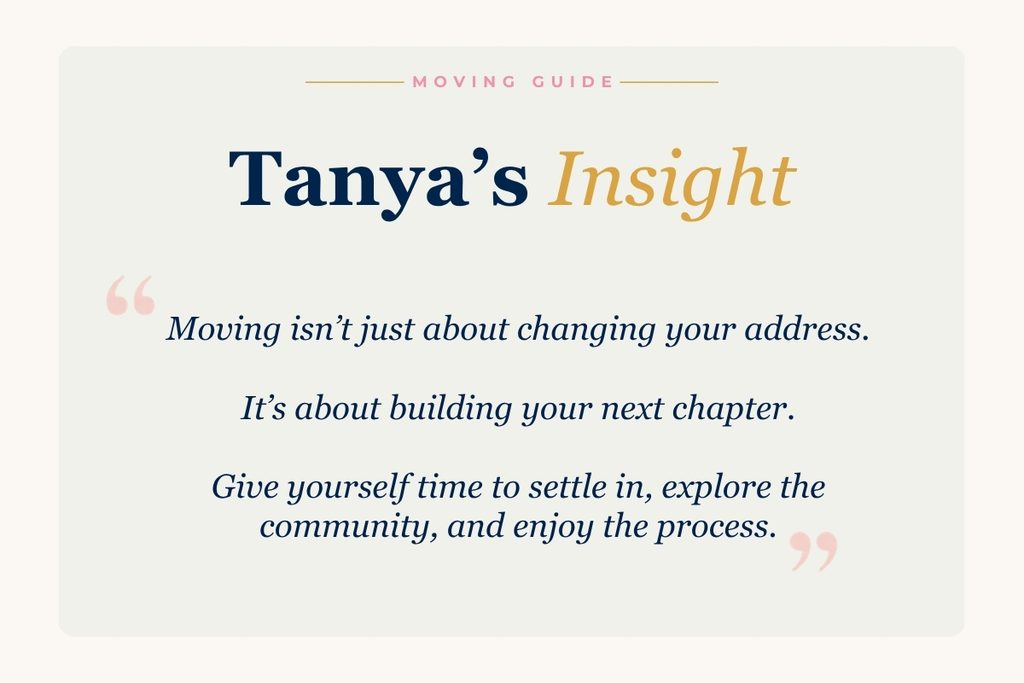
Moving to a new home is a big milestone, and it can feel overwhelming at times.
You don’t need to unpack everything or figure everything out at once. Start early, stay organized, and work through one task at a time. Small steps add up, and before long, you’ll be unpacked, settled in, and enjoying your new community.
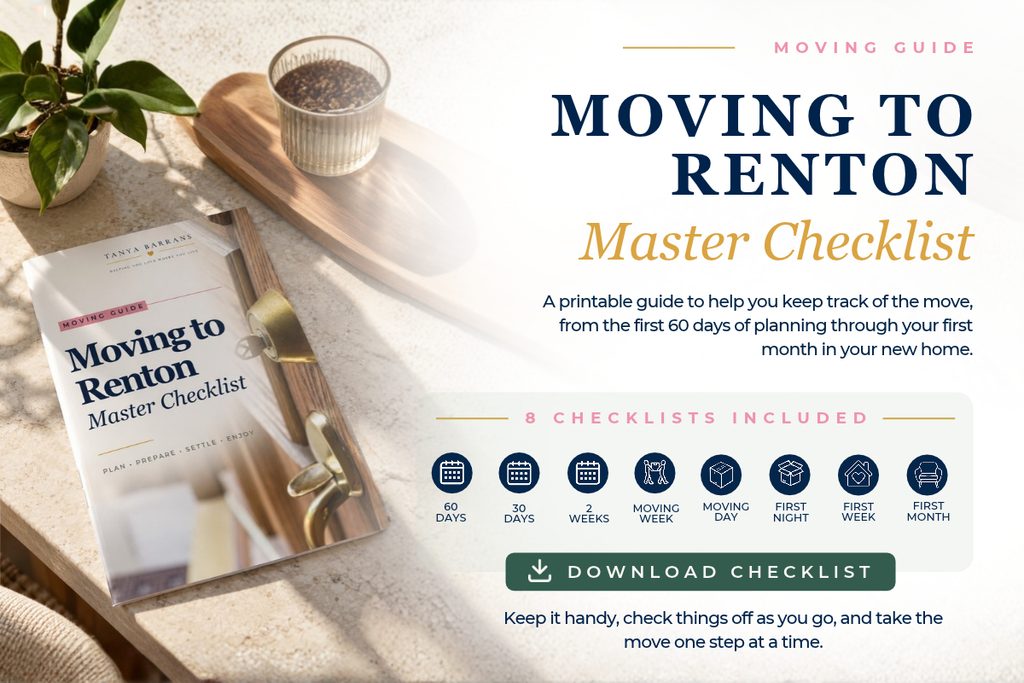
Download Your Moving Checklist
Want an easier way to keep track of everything?
Download the printable Moving to Renton Master Checklist and use it alongside this guide as you work through each stage of your move.